
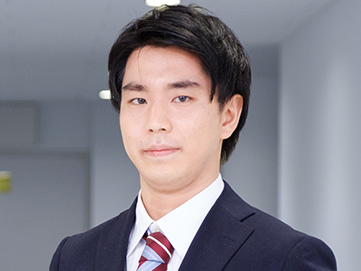
—Why did you choose to pursue platform studies?
In the field of disaster prevention studies, the specialized research format of focusing on each separate disaster has served as the mainstream approach over the years. However, what happened with the Great East Japan Earthquake of March 2011 was a complex overlap of disasters targeted individually in the past. In the specialized research format adopted up to now, it will prove impossible to fully grasp the aspects of future disasters. There are demands for collection of information on an integrated, comprehensive, and time-series basis, followed by the formulation of predictions. The current situation may be characterized by the compilation of numerous types of data, steadily bringing an environment capable of being organized as big data into existence. While this represents progress, that alone will not be sufficient. Responses must be mounted capable of coordinating everyone’s actions upon disasters, thereby moving to achieve the identical objectives. For that purpose, it is my conviction that the need exists for possession of comprehensive information and shared perspectives, prompting me to enroll in the School of Platforms program.
—What research themes are you currently working on?
I am advancing development of disaster response simulation that deals with evacuation of residents, government’s relief efforts, and other routes of action after disasters occur. While there is considerable research targeting themes such as disaster damage predictions and the degree of impact that disasters will have on society, we have seen little appropriate debate on the responses needed to deal with such situations. When disasters do occur, numerous issues emerge including ambulance transport, infrastructure recovery, shelter operation, and food distribution. In my view, these issues do not occur independently, but rather unfold in the midst of complex mutual relationships. In terms of individual elements, specialized platforms or services capable of addressing each separate area may very well exist. However, there is currently no platform capable of coordinating all such responses. Although data for each specific field has been compiled, I do not feel that we have achieved a grasp of the impact between the layers of different fields. My idea is to utilize a disaster prediction model to comprehend such complex conditions, while striving through simulation of people and their actions to furnish grounds for verification.
—What have you gained through the School of Platforms program?
I have heightened my perception of how platforms are applied as key driving forces in society, as well as why they fail to function as such forces in certain cases. There is no absolute guarantee that platforms themselves will generate correct answers. Just because we gather, integrate, and organize data does not mean that platforms will be completed. Designs must be formulated that truly zero in on user issues. There are numerous cases where such issues may be resolved through application of existing technology. For example, introducing robots in agriculture may result in solutions to certain challenges. There will always be users willing to use such advances in platforms, meaning that adopting that technology can render it possible to surmount the challenges. I feel I have learned how to effectively address such systems from an overall perspective.
—What is the platform to you (ideal situations, desirable future, etc.)?
I believe that platforms furnish equal access for all people to specialized knowledge and technology that has proved difficult to grasp and deal with to date. As such, platforms expand venues for use of new technologies (tools) in the innovation of new services by persons other than experts as well. Even ordinary people can be empowered to create things through combinations of such tools, while enabling unobstructed innovation by bringing on board the services of other parties. In this way, I also foresee newly emerging services becoming the components for others’ services, paving the way to advances in technology and industry for the society as a whole. If I am able to assume the position of a platform creator, I hope to incorporate the vision of building environments where innovation is prone to emerge in my own perspective as well.
—If the goal is to improve the world just a little from where it stands today, what do you think is needed, or what would you like to do?
Japan is literally awash in platforms for electronic payments, social media, music, services, and numerous other areas. This has reached the point in which I yearn for a platform capable of bundling together these numerous platforms. In addressing that challenge, however, I fear that even as functions have been enriched, various problems are emerging in terms of effective utilization by users. There is a need to create venues where all the individual pieces of the puzzle are not available, avoiding situations in which certain individuals monopolize specific areas. As a result, I foresee platforms effective in bringing all things on track coming into existence. At any rate, I keenly sense the need for collaborative design to support coexistence with society and build a better tomorrow.
back to Interview